Thirty Nights of Canned Coffee and Questionable Soda: Dispatches From a Vending Machine Broadcast
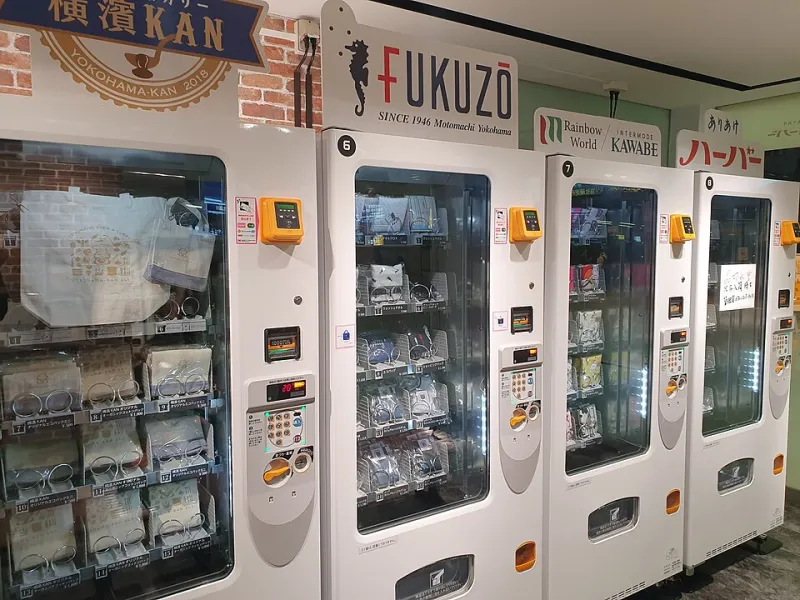
Photo: Syced, CC0, via Wikimedia Commons
There is a specific hour, somewhere past midnight and before the first train, when a Japanese vending machine stops being a convenience and starts being a co-host. The hum, the lit-up rows, the hollow clunk of a can hitting the tray — it is basically a radio studio with worse seating. So for one month this fall, I decided to treat it that way: one drink a night, reviewed in my head like a late-night host with nobody in the booth and a microphone that may or may not be live.
This is not science. Nobody asked for a control group. But if you have ever stood in front of a glowing machine in a rain-soaked alley in Osaka, or at a rest stop off the Tomei Expressway, and thought, what is that purple one — this log is for you.
The Rules of the Broadcast
Four rules, mostly kept. One: one new drink per night, no repeats unless the repeat was the entire point. Two: hot and cold both count, because the hot-can slot is where Japan hides its strangest ideas. Three: I had to finish at least half of each can, a rule I regretted at least four times. Four: every review gets a sign-off, because a show without a sign-off is just a person drinking alone in a parking lot.
Budget: roughly 150 yen a night, which in 2026 dollars is still cheaper than a mediocre iced coffee in most US cities. The whole month cost less than one arena concert ticket. The dignity cost is not calculable.
Week One: The Coffee Problem
Japanese canned coffee is a genre, not a beverage. Week one was mostly black coffee in cans that all claim to be the same thing and all taste like different rooms. One was smoky and tasted like a library with a fireplace. One was so smooth it barely registered, like a podcast played at volume two. One had a label so serious I felt underdressed holding it.
Then came the sweet ones. There is a whole subcategory of canned coffee that is essentially melted coffee ice cream with a caffeine alibi. I gave one of them four out of five signal bars and then did not sleep until 3 a.m., which I am choosing to interpret as a successful broadcast.
Hot-can note: the heated slot is real, and in November it is the single greatest piece of public infrastructure in Japan. A hot can of corn potage from a machine at a windy bus stop is not a drink. It is a hug with a nutrition label.
Week Two: The Fruit-Flavored Uncanny Valley
This is where things got weird. Japan does fruit flavors with total confidence and zero obligation to resemble fruit. A grape drink that tasted like the idea of grape, as described by someone who once saw a photograph of a grape. A peach soda that was somehow both too sweet and too cold, like a slushie that had been through a breakup. A melon drink I can only describe as green.
The surprise of the month: a plain, unglamorous barley tea in a can. No sugar, no mascot, no promises. It tasted like the water you drink after a long walk, and it took the highest score of week two. The lesson, as always: the loud cans lie and the beige cans deliver.
Week Three: The Machine-Only Snacks
Some machines sell food, and that is where the format gets interesting. I found a machine selling small packs of rice crackers, a machine selling what I can only call a bread product, and one glorious machine that sold exactly one item and had clearly committed to that bit for years.
The bread product was fine. The rice crackers were better than fine. But the real star was the machine itself — a battered, humming box with a handwritten note taped to the front and a coin slot that had seen things. In a country with a convenience store on every other block, the machines that survive are the ones with personality. I have started photographing them the way other people photograph birds.
Week Four: The Seasonal Drop
Late autumn is limited-edition season, and the machines know it. I found a chestnut-flavored something, a sweet potato drink that tasted like a state fair in a can, and a hot lemon beverage that turns out to be a whole winter tradition I had been ignoring for years.
The chestnut one I would buy again. The sweet potato one I would buy again out of spite. The hot lemon I would buy by the case if I could, and this feels like the right moment to formally apologize to everyone in the US who has been sleeping on hot canned citrus.
The 2026 Wish List for US Shelves
If any importer in the States is reading this — and statistically, one of you might be — here is what I want on the shelf at H Mart, Mitsuwa, or 99 Ranch next year.
More hot-can options. Not just the coffee. The corn potage, the hot lemon, the odd little soups. A shelf that stays warm is a novelty here and an entire category there.
More barley tea, less sugar. The unsweetened teas are the best value in the whole machine and the hardest to find stateside.
And one vending machine, somewhere in a US city, that sells only one thing and refuses to explain itself. That is the dream. That is the whole dream.
Sign-Off
Thirty nights, thirty cans, one very patient recycling bin. The best drink of the month was not the strangest one. It was a warm can of soup at a bus stop in the rain, which is not a sentence I expected to write in 2026, but here we are.
Tomorrow night, same machine, same hour. If you are listening: the purple one is not worth it.